When the Road Disappears: The Reality of Driving in Snow
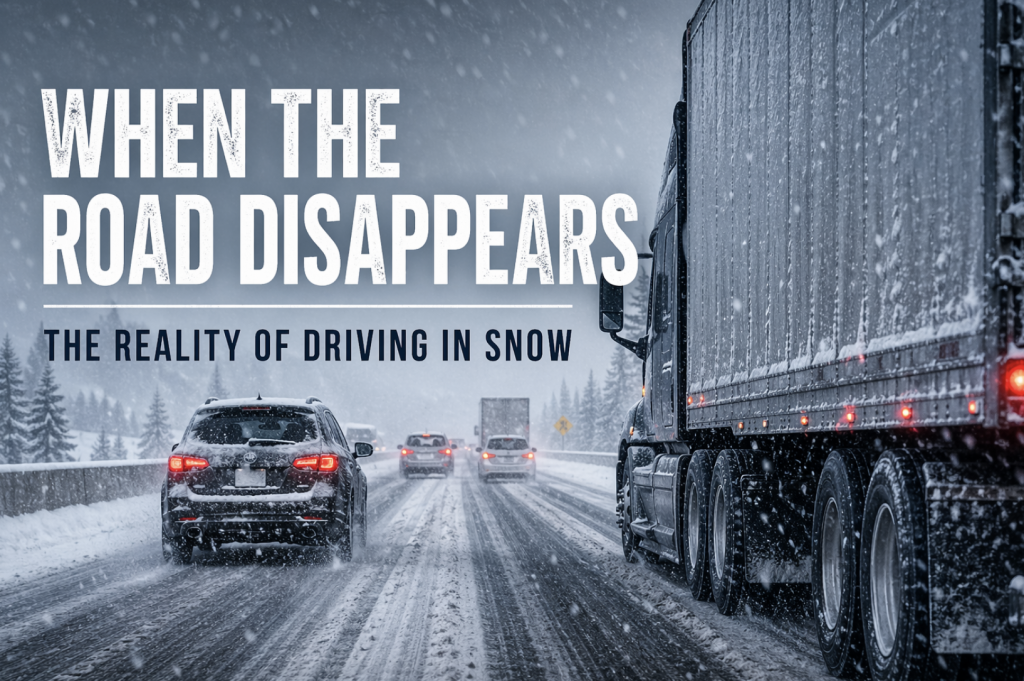
Driving in the snow changes everything.
The road you know so well in clear weather becomes something unfamiliar. Lines fade, edges blur, and what once felt predictable now feels uncertain. Even the simplest drive can turn into a tense and exhausting experience. It is not just about getting from one place to another. It becomes about staying aware every second, reading conditions that are constantly shifting, and hoping that everyone else on the road is doing the same.
The Loss of Control You Can Feel
One of the hardest parts of driving in the snow is the feeling of losing control, even when you are doing everything right.
You can be moving slowly, keeping distance, and staying focused, and still feel your tires slip. It may only last a second, but that second is enough to remind you how quickly things can change. The steering wheel feels lighter, less connected. The brakes respond differently. The vehicle does not always do what you expect it to do.
That unpredictability stays in the back of your mind the entire time.
Every turn requires more attention. Every stop feels uncertain. You begin to notice small things, like how your car reacts to packed snow versus slush, or how a slight incline suddenly feels much steeper than it should. These details matter, and they demand your full attention.
But even when you are fully focused, you cannot control everything. The road is shared, and that is where the real tension begins.
The Pressure of Other Drivers
Driving in the snow would be difficult enough on its own. What makes it more stressful is the presence of other drivers who may not adjust to the conditions.
You might be moving carefully, leaving space, and trying to stay steady, while someone behind you is impatient. They follow too closely or try to pass when the road does not allow it. In those moments, the pressure builds. It is not just about your own driving anymore. It becomes about reacting to someone else’s decisions.
There are also drivers who underestimate how dangerous the conditions really are. They drive at normal speeds, as if the road has not changed. From inside your vehicle, you can see the risk clearly. You can feel how little traction there is. You know how easily things can go wrong.
Watching someone else ignore that reality creates a different kind of stress.
It forces you to stay even more alert, not just to the road, but to the behavior of every vehicle around you. You begin to anticipate mistakes before they happen. You notice sudden lane changes, late braking, and quick accelerations that do not match the conditions.
All of this adds to the mental load of driving in the snow.
When the Drive Feels Endless
Time moves differently when you are driving in winter conditions.
A trip that normally takes twenty minutes can feel much longer. Not just because of reduced speed, but because of the constant attention required. There is no moment where you can fully relax. Your eyes are always scanning. Your mind is always processing.
You watch the road surface. You watch other cars. You listen to the sound of your tires. Every small change matters.
Fatigue can set in faster than expected, not because of physical effort, but because of the mental strain. Staying focused for that long, in those conditions, requires energy. By the time you reach your destination, you may feel more drained than you would after a much longer drive in clear weather.
And even after you arrive, the tension does not always leave right away. It lingers, a reminder of how demanding the experience was.
Driving in the snow is not just another version of driving. It is a completely different experience that requires awareness, patience, and respect for the conditions.
When people treat it like any other day on the road, they increase the risk for everyone around them.
The reality is simple. In the snow, every decision matters more. Every action carries more weight. And every driver plays a role in what happens next.